
The Cavapoo gets described as the perfect family dog so often that it has become almost a cliché. Cross a Cavalier King Charles Spaniel with a Poodle and you get a small, affectionate, relatively low-shedding companion who adapts to apartments and houses alike. All true, and all the reason this breed keeps climbing in popularity across Houston.
What the shorthand leaves out is the detail. Good cavapoo puppy care depends on a handful of specifics that surprise even people who have owned dogs before: how fast the coat mats, how strongly the velcro temperament shows up, and why two Cavapoos from different generations can look and behave quite differently from each other.
None of this is discouraging. It is just the information that makes the first six months smoother. Here are the ten things new Cavapoo owners most often say they wish someone had explained upfront.
1. The Generation Label Tells You What to Expect
Cavapoo listings come with labels like F1, F1B and F2, and they are not marketing. They describe the cross and they predict the coat.
An F1 Cavapoo has one Cavalier parent and one Poodle parent, a straight fifty-fifty cross. Coats in an F1 litter vary widely. Some puppies come out with loose waves closer to the Cavalier side and shed noticeably. Others land closer to the Poodle and barely shed at all. Within one litter you can see both.
An F1B Cavapoo is an F1 bred back to a Poodle, so roughly seventy-five percent Poodle. These puppies are far more consistently curly and far more reliably low-shedding, which is why families with mild allergy concerns usually get steered toward F1B.
An F2 is two F1 Cavapoos bred together, and coat outcomes get unpredictable again.
The practical takeaway: if low shedding is important to you, ask for the generation and look at the puppy’s actual coat texture rather than trusting the breed name alone. No Cavapoo is truly hypoallergenic. Lower-shedding simply means less hair moving around your house, not an absence of the proteins that trigger reactions.
2. Coat Maintenance Is the Biggest Hidden Commitment
This is the single most common surprise. A Cavapoo’s coat needs brushing three to four times a week minimum, and daily during the coat change that happens somewhere between seven and twelve months old.
The reason is that Cavapoo hair grows continuously rather than shedding out on a cycle. Loose hair that would fall off a Labrador stays tangled in a Cavapoo’s curls instead, and those tangles tighten into mats close to the skin. Mats are not just cosmetic. They pull, they trap moisture, and in Houston humidity they can cause genuine skin irritation underneath.
Professional grooming every six to eight weeks is the standard, and in this climate many owners go every six. Budget $70 to $100 per visit depending on coat condition and the groomer. A matted coat costs more because the only humane option is a short shave-down, which is why consistent home brushing between appointments saves real money.
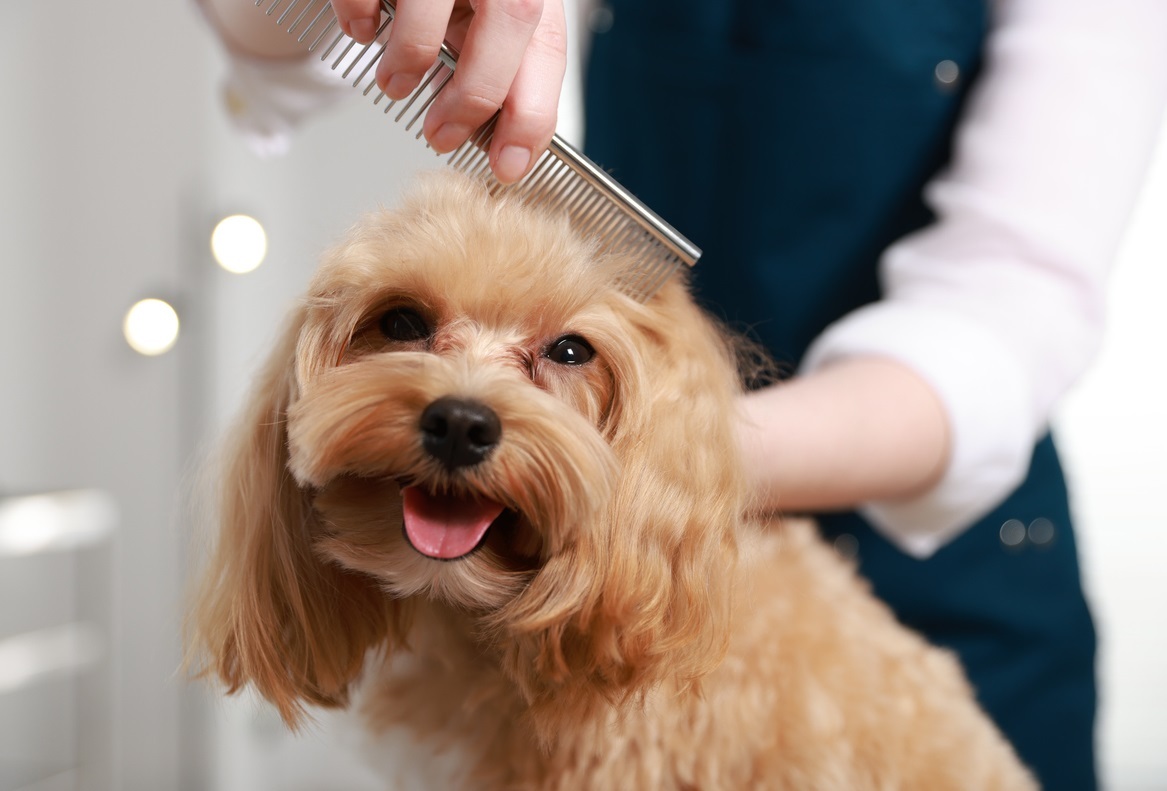
Buy a slicker brush and a metal greyhound comb. The comb is the part people skip, and it is the part that finds mats the brush glides over. Run it through to the skin. If it snags, that spot needs work now, not next week.
3. The Velcro Temperament Is Real, and It Cuts Both Ways
Cavapoos inherit a strong desire for human closeness from both parent breeds. Cavaliers were bred as lap companions. Poodles are intensely people-oriented working dogs. The result is a puppy who wants to be in whatever room you are in, often touching you.
For many households this is exactly the appeal. It makes for an affectionate, emotionally attuned dog who is genuinely easy to live with.
The flip side is that Cavapoos are among the breeds most prone to developing separation distress when left alone without preparation. A puppy who is never taught that solitude is survivable, because someone has been home every hour of its first four months, can struggle badly when routines change.
The fix is simple and needs to start in week one. Leave the puppy alone for short, boring, non-dramatic stretches every single day. Five minutes, then fifteen, then forty. No emotional goodbyes, no emotional reunions. Give a stuffed chew, walk out, come back, ignore the puppy for a minute, then greet calmly. Practiced early, this is a non-issue. Skipped entirely, it becomes the hardest problem you will face.
4. They Are Smart, Which Means They Learn Bad Habits Just as Fast
Poodle intelligence runs through the Cavapoo clearly. These puppies pick up sit, down and place in days rather than weeks, which is delightful right up until you realize they have also learned that barking at the back door produces a door opening, and that sitting prettily near the dinner table produces food.
Cavapoos are pattern-recognition machines. They notice what works. Whatever behavior you accidentally reward twice becomes a habit by the fifth repetition.
The practical approach is to decide your household rules before the puppy arrives and keep every adult consistent. If the couch is allowed, allow it always. If it is not, never make an exception on a tired Tuesday evening. A Cavapoo will absolutely remember the exception and test it nightly for a month.
Short training sessions work far better than long ones. Three sessions of five minutes beats one session of fifteen, because the breed’s enthusiasm outpaces its attention span at this age.
5. Exercise Needs Are Moderate, Not Low
The small size misleads people. Cavapoos are not sedentary lap dogs. They need around thirty to sixty minutes of real activity daily once fully vaccinated and grown, split across walks and play.
The underexercised Cavapoo is a recognizable creature: barky, mouthy, unable to settle, destructive with household items. Nearly always the cause is a dog whose brain and body are idle rather than a dog with a behavior problem.
Houston’s heat complicates this for much of the year. From May through September, walking a Cavapoo in midday sun is a genuine risk, and the pavement temperature matters as much as the air temperature. Early morning and after dusk are the workable windows. On the worst days, substitute indoor work: puzzle feeders, scent games where you hide treats around a room, training sessions, tug in a hallway. Fifteen minutes of nose work tires a Cavapoo more than thirty minutes of walking, which is a useful trick in August.
6. Puppy-Specific Exercise Limits Still Apply
Growing joints need protection. The general guideline is roughly five minutes of structured walking per month of age, twice daily, so a three-month-old Cavapoo gets about fifteen minutes per outing rather than a two-mile hike.
Free play in a yard or living room, where the puppy chooses its own pace and stops when tired, is different and less of a concern. The limit applies to sustained activity you are driving: long walks, jogging alongside you, repeated stair climbing, or anything with a lot of jumping down from furniture.
This matters for small breeds specifically because a Cavapoo jumping off a high sofa repeatedly puts real force through growing front legs. Ramps or a strategically placed ottoman help more than you would expect.
7. They Are More Sensitive Than Their Confidence Suggests
A Cavapoo puppy who bounds up to strangers at twelve weeks can become a cautious dog at eight months if socialization stops. The Cavalier side brings genuine softness, and harsh corrections land harder on this breed than on many others.
Raised voices, leash jerks and startling punishments do not just fail to work on a Cavapoo, they tend to produce a dog who shuts down or becomes wary of the person delivering them. Reward-based training is not merely the kinder choice here, it is the more effective one.
Socialization in the first four months should be broad and deliberately positive: different flooring surfaces, umbrellas, hats, children’s voices, car rides, vacuum noise, men with beards, people in uniform. Keep every exposure short and pleasant. The window for building a confident adult dog closes sooner than most people expect, and it does not reopen.
Our guide to Socialization Tips for a Happy and Well-Behaved German Shepherd Puppy covers the structured exposure framework in more detail, and the method transfers directly to a Cavapoo even though the breed is very different.
8. Houston’s Climate Shapes Daily Care
Three local realities worth planning around.
Humidity and coat. Damp curls mat faster and dry slower. After a bath or a rainy walk, dry the coat thoroughly, especially under the ears, in the armpits and around the collar line. A coat that stays damp against the skin in this humidity invites irritation.
Ear care. Cavapoos inherit the Cavalier’s low, feathered, drop ears. Combined with warmth and moisture, that is an environment ears do not love. Check them weekly, keep them dry, and watch for head shaking or scratching.
Heat tolerance. Cavapoos handle heat better than flat-faced breeds but worse than a short-coated dog of similar size. The practical rule for Houston summer: if you cannot hold the back of your hand on the sidewalk for seven seconds, it is too hot for paws.
9. The First Week Sets the Tone for the Next Year
Cavapoo puppies arrive in a new home somewhat overwhelmed, and the temptation is to flood them with attention, visitors and new experiences immediately. Resist it.
A better first week looks quiet. Limit the household to immediate family. Keep a predictable rhythm of sleep, potty breaks, small meals and short play. Establish the crate as a good place from night one rather than night five. Start the brief alone-time practice described earlier.
What you are building is a puppy whose baseline is calm. That baseline is far easier to install in the first ten days than to retrofit at six months.
Our walkthrough of What to Expect During Your First Week With a French Bulldog Puppy lays out a day-by-day structure that works just as well for a Cavapoo, with the caveat that your exercise and heat limits differ from a brachycephalic breed.
10. Know What You Are Signing Up For Long Term
A Cavapoo lives twelve to fifteen years. Across that span the recurring commitments are real and worth seeing clearly.
| Commitment | What it looks like | Rough annual cost |
| Professional grooming | Every 6 to 8 weeks | $600 to $850 |
| Home brushing | 3 to 4 times weekly, 10 minutes | Time, not money |
| Food | Small breed, 1/2 to 1 cup daily | $300 to $500 |
| Routine wellness care | Annual visits, preventatives | $400 to $700 |
| Enrichment and toys | Replaced regularly | $150 to $250 |
| Companionship | Not a dog that does well alone all day | Lifestyle fit |
The grooming line is the one people underestimate by the widest margin. Over a thirteen year life, professional grooming alone runs somewhere between $8,000 and $11,000. That is not a reason to avoid the breed. It is a reason to know the number before you commit rather than after.
Cavapoo at a Glance
| Trait | Cavapoo |
| Adult weight | 12 to 25 lbs |
| Adult height | 9 to 14 inches |
| Coat | Wavy to curly, continuously growing |
| Shedding | Low to moderate, varies by generation |
| Grooming | High maintenance |
| Energy level | Moderate |
| Trainability | High |
| Good with children | Yes, with supervision for small sizes |
| Tolerates being alone | Poorly without training |
| Apartment suitable | Yes |
| Lifespan | 12 to 15 years |
For families comparing small companion breeds, Maltese vs Bichon Frise: What’s the Difference is a useful companion read, since both of those breeds share the Cavapoo’s grooming demands while differing in temperament and energy.
Conclusion
Thoughtful cavapoo puppy care really comes down to three things: stay ahead of the coat, teach independence early, and give the dog enough mental work to use that intelligence productively. Get those right and you have one of the most pleasant small companions available, a dog genuinely suited to Houston apartments, family homes and everything in between.
What catches people out is never the affection or the trainability. It is the brushing schedule nobody mentioned and the separation distress nobody prepared for. Now you know both.
If you are considering a Cavapoo, come meet the puppies at Pet City Houston. Our team can walk you through generation differences, show you the actual coat texture on the puppy you are interested in, and give you a straight answer about whether the grooming commitment fits your household. Visit us in Houston, and bring your questions.
Frequently Asked Questions
Are Cavapoos hypoallergenic?
No breed is truly hypoallergenic, Cavapoos included. They shed less than many breeds, which means fewer allergens circulating in your home, but the proteins that cause reactions are present in saliva and skin cells regardless of coat type. F1B Cavapoos, being more Poodle, tend to be the better choice for mild sensitivities. If allergies are a serious concern, spend extended time around the specific puppy before committing.
How often do Cavapoos need professional grooming?
Every six to eight weeks, and in Houston’s humidity many owners find six weeks works better. Between appointments you need to brush three to four times a week with both a slicker brush and a metal comb. Skipping home maintenance leads to matting, and a matted coat usually has to be shaved short rather than trimmed.
Can a Cavapoo be left alone while I work?
Not comfortably for a full eight to nine hour day, and especially not as a puppy. Cavapoos are among the breeds most prone to separation distress. Four to five hours is a realistic ceiling for a well-prepared adult. If your schedule involves long absences, plan for a midday walker, daycare a few days a week, or choose a breed with more tolerance for solitude.
How big do Cavapoos get?
Most adult Cavapoos land between 12 and 25 pounds and stand 9 to 14 inches at the shoulder. The range is wide because it depends on whether a Toy or Miniature Poodle was used in the cross. Ask about the parents’ sizes, which predicts adult weight far better than the puppy’s current size does.
Are Cavapoos good with young children?
Generally yes. They are gentle, tolerant and playful, which makes them a popular family choice. The caution is size rather than temperament: a 14-pound dog can be injured by a toddler who falls on it or picks it up wrong. Supervise interactions, teach children how to handle a small dog, and give the puppy an off-limits retreat space it can use whenever it wants.
How much exercise does a Cavapoo puppy need?
Use roughly five minutes of structured walking per month of age, twice daily. A four-month-old gets about twenty minutes per outing. Free play where the puppy sets its own pace is separate and less restricted. Adults need thirty to sixty minutes daily, which in Houston summer often means shifting to early morning, after dark, and indoor enrichment on the hottest days.
Do Cavapoos bark a lot?
They are moderate barkers by nature, but underexercised or bored Cavapoos become noisy ones. Most barking complaints about this breed trace back to insufficient mental stimulation or to a puppy who learned barking gets results. Consistent routines, enough enrichment, and not rewarding demand barking keep it manageable.