
Walk into any pet store and the chinchilla looks like the easiest pet in the building: a soft, quiet animal sitting in a cage, asking for nothing. That first impression is the most expensive mistake a first-time owner can make, because a chinchilla is a 10 to 15 year commitment with the densest fur of any land mammal, a body built for cool mountain air, and a daily routine that runs whether you feel like it or not. The good news is that good chinchilla care is mostly a matter of five habits: cool, dry air, unlimited hay, a tall cage to climb, dust baths several times a week, and handling on the animal’s terms. None is difficult, and all of them matter. The temperature rule matters most, because a chinchilla cannot sweat and cannot tell you it is overheating until it is already in trouble. This guide walks through the whole setup for a first-time owner: the cage, the food, the dust baths, the Houston heat question, and the real costs. Read it before you bring one home, not after.
What a Chinchilla Actually Is
Chinchillas come from the Andes mountains of South America, where the air is cool, dry and thin. Their famous fur has roughly 20,000 hairs per square centimeter, which is why it feels like velvet and why heat and humidity are the enemy. An adult weighs about 1 to 1.5 pounds and measures 9 to 14 inches long, with a tail adding another 3 to 6 inches. With good care, expect 10 to 15 years together, and some chinchillas reach 20. They are crepuscular, which means they are most active at dawn and dusk and sleep through the middle of the day. That is the first schedule mismatch to plan around: your chinchilla will be at its liveliest around 7 or 8 in the evening, just as you are settling down. They are also prey animals, so they startle at sudden movement and loud noise. A chinchilla suits a calm household with older children, not a small child who wants to cuddle something at noon. If your household needs a daytime pet instead, our guide to pet reptiles for beginners covers animals that keep more conventional hours.
The Cage: Build Up, Not Out
Chinchillas climb, so height matters more than floor space. Look for a tall, multi-level wire cage at least 3 feet high, with bar spacing no wider than half an inch so a young chinchilla cannot squeeze through. Inside, the essentials are a hide house, two or three wooden ledges at different heights, a heavy ceramic food dish, and a 16 to 32 ounce water bottle hung outside the bars. Cover wire floors with fleece liners or solid platforms: bare wire hurts feet over time. Skip plastic accessories entirely: chinchillas chew everything and swallow what they chew. Place the cage in a quiet room away from windows, direct sun and exterior doors, and choose the spot before the cage arrives, because a full setup is heavy to move twice.
Food: Hay First, Everything Else Second
Hay is not a side dish for a chinchilla, it is the diet. Unlimited timothy hay should fill the rack at all times, and it should make up roughly 80 percent of everything your chinchilla eats. Hay keeps the gut moving and wears down teeth that grow continuously. Alongside it, offer 1 to 2 tablespoons of plain chinchilla pellets per day, and no more: pellets are dense, and overfeeding them is the fastest route to a picky eater that ignores its hay. Treats stay small and rare. A single rose hip, a pinch of dried herbs, or a tiny piece of dried apple two or three times a week is plenty. Skip the yogurt drops, honey sticks and seed mixes in the small-pet aisle, and never offer fresh fruit, vegetables, nuts or seeds as regular food: chinchilla digestion is built for dry, fibrous food. Change the water daily, even when the bottle still looks full.
Dust Baths: The Part Everyone Loves, Done Right
A chinchilla never gets a water bath. Instead, it rolls in fine volcanic ash dust, which absorbs oil and moisture from the coat and keeps it clean. Offer a dust bath two or three times a week in a heavy container your chinchilla can roll in without tipping, and leave it in the cage for 10 to 15 minutes per session, then take it out. Dust left in the cage all day gets used as a toilet, and too-frequent baths dry the skin. Buy dust made for chinchillas, not sand or ground pumice. A 3-pound bag costs around $10 to $15 and lasts a couple of months at two baths a week. Brush the coat lightly once a week during shedding season, and grooming is done. 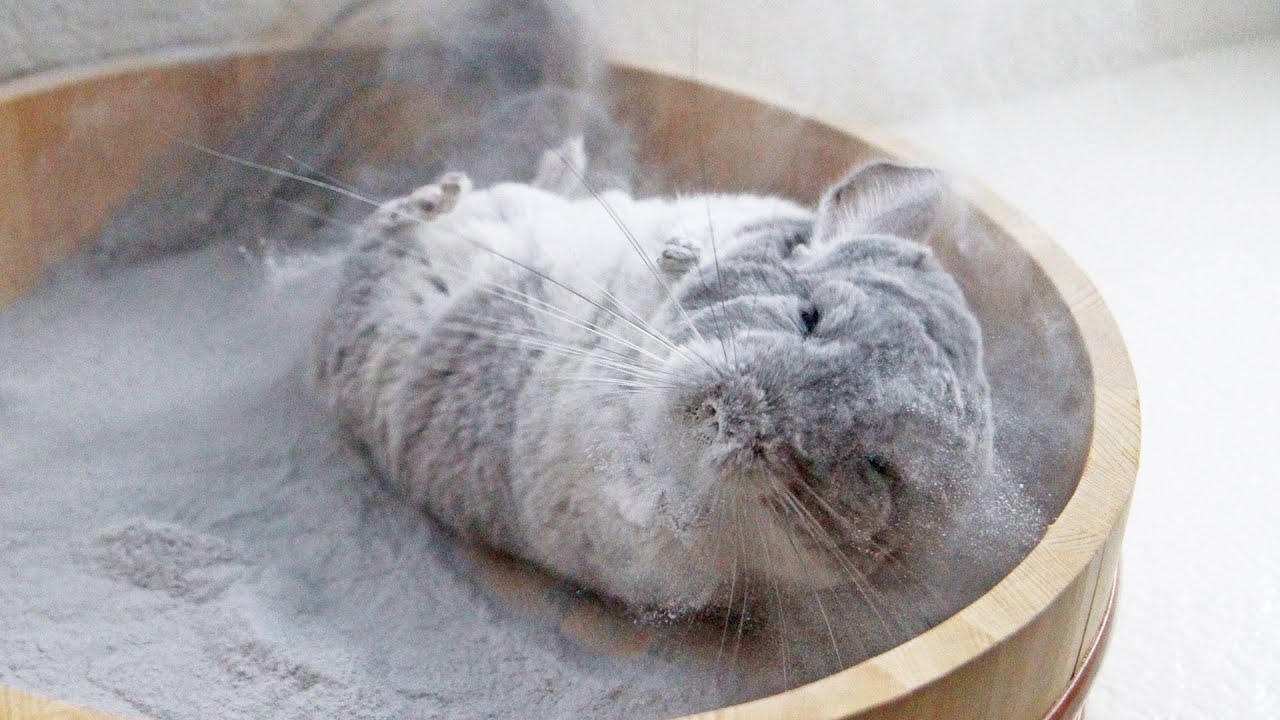
Your weekly care routine at a glance
| Task | How often | Time needed | Notes |
|---|---|---|---|
| Fresh hay and water | Daily | 5 minutes | Top up the hay rack and change the water bottle every morning |
| Spot clean droppings | Daily | 5 minutes | Scoop the cage floor and any soiled fleece before it builds up |
| Dust bath | 2 to 3 times a week | 10 to 15 minutes | Remove the bath after the session so it stays clean |
| Out-of-cage play | Daily | 30 to 60 minutes | Supervised, in a chinchilla-proofed room with cords covered |
| Full cage clean | Weekly | 30 to 45 minutes | Replace fleece and bedding, wipe shelves, scrub the bottle |
| Check chew toys and nails | Weekly | 5 minutes | Replace chewed-through toys; check nails |
| Weigh and observe | Weekly | 5 minutes | A steady weight and a normal appetite are your best everyday signals |
Times are for one chinchilla. Two double the hay and the cleaning, not the playtime.
Run that routine for a month and it stops feeling like a chore and starts feeling like a rhythm. That is the real secret of chinchilla care: the animal does not need constant attention, it needs the same good habits repeated on schedule. The owners who struggle are almost never the ones who care too little. They are the ones who let the cage, the hay or the dust bath slide on a busy week.
Houston’s Heat Is the Real Challenge
Here is the part that matters most in this city. Chinchillas thrive between 60 and 70 degrees Fahrenheit, and they start struggling above 75. Houston spends most of the year well above that outdoors, which means your chinchilla lives indoors, in air conditioning, all year, with no exceptions. Never put the cage on a patio, in a garage, or near a sunny window, and keep the room below 50 percent humidity if you can. A small dehumidifier in the room is one of the best purchases a Houston owner can make. Plan for power outages before hurricane season, not during it. Keep two or three water bottles frozen, wrapped in a towel, so you can cool the cage if the air conditioning goes out. A ceramic tile or a piece of marble in the cage gives your chinchilla a cool surface to lie on, and a battery-powered fan buys time. Know which room stays coolest with the power off, and move the cage there early. A chinchilla cannot wait out a hot afternoon the way a dog can.
Handling, Bonding and Playtime
Chinchillas bond slowly and on their own terms. For the first week, let your new chinchilla settle in without handling: talk near the cage, offer a treat through the bars, and let it learn your voice. After that, sit on the floor and let the chinchilla come to you. When you pick one up, support the hindquarters with one hand and the body with the other, and keep sessions to 15 or 20 minutes. Children under ten should handle a chinchilla only with an adult’s hands guiding theirs, because a dropped chinchilla is an injured chinchilla. Playtime happens outside the cage, in a room you have chinchilla-proofed first: cords covered, gaps blocked, houseplants removed. Thirty to 60 minutes a day is plenty, and a solid-surface exercise wheel of 14 to 15 inches inside the cage covers the rest. Skip wire or mesh wheels, and skip exercise balls: the ventilation is poor and the animal cannot stop when it wants to. If you are weighing a chinchilla against a pet that interacts more directly, our story on the joys of rescuing a parakeet is a useful contrast: birds are daytime companions, chinchillas are evening ones.
What It Costs, Honestly
Budget about $250 to $450 to set up properly: a good cage runs $150 to $300, plus the hide house, ledges, bottle, dust bath and first supplies. After that, monthly costs run $40 to $70: hay $15 to $25, pellets $10 to $15, dust $5 to $10, and chew toys and bedding $10 to $20. Add a yearly wellness visit with an exotics veterinarian, typically $75 to $150. Over a 12-year life the total lands around $7,000 to $10,000, less than a dog and more than a hamster, and it is worth saying out loud before you buy.
Conclusion
A chinchilla is a quiet, long-lived companion for an owner who can offer cool air, unlimited hay and a steady routine. The work is small and specific, the payoff is a pet with real personality that can share your home for well over a decade. Keep the room cool, the hay rack full and the dust baths on schedule, and chinchilla care will feel less like a project and more like a habit you are glad you built. When you are ready, come and meet the chinchillas at Pet City Houston and talk through the setup with our team before you buy. We would rather help you build the right cage slowly than sell you the wrong one fast. Start by browsing every kind of pet at Pet City Houston, then visit the store and see them in person.
Frequently Asked Questions
How much does a chinchilla cost?
Expect $250 to $450 for the setup, $40 to $70 a month for food and supplies, and $75 to $150 for a yearly wellness visit. The animal itself typically costs $150 to $350, and the lifetime total lands around $7,000 to $10,000.
How often do chinchillas need a dust bath?
Two or three times a week for 10 to 15 minutes per session. Offer the bath in a heavy container, then remove it when the session ends so the dust stays clean. Never bathe a chinchilla in water.
Can chinchillas live in Houston’s heat?
Yes, indoors, with air conditioning. Chinchillas need 60 to 70 degrees and start struggling above 75, so the cage stays inside in a cooled room year-round, never on a patio or in a garage. Keep humidity under 50 percent and keep frozen bottles ready for power outages.
Are chinchillas good pets for children?
They suit calm children aged ten and up who can handle gently and understand that the animal sleeps during the day. Younger children should only handle a chinchilla with an adult’s hands guiding theirs, because chinchillas are fragile and startle easily.
What do chinchillas eat?
Mostly timothy hay, unlimited and always available, plus 1 to 2 tablespoons of plain chinchilla pellets a day and fresh water. Treats stay small: a rose hip or a pinch of dried herbs a few times a week. Skip fresh fruit, nuts, seeds and yogurt treats.
How long do chinchillas live?
Most live 10 to 15 years with good care, and some reach 20. Say that number out loud before you buy: a chinchilla bought for a teenager may still be with the family when that teenager has a job and an apartment.